

When I first heard an Xcom Board Game was being released I was ecstatic. Picturing the physical realisation of a favourite video game I imagined squads of plastic miniatures battling over a hexagonal battlefield whilst researching, training and ever improving. With that in mind you can imagine my dismay when I learnt that XCOM: The Board Game was more about resource management than tactical combat.
Boo hoo. Poor Dave. Get over it. I did… I bought it… and I’m glad I did because the game is fantastic.
Rooted firmly in XCOM Lore the board game focuses on time and resource management. Much like its video game counterpart you must collect alien salvage, research upgrades, and complete missions all while defending your base, preventing world panic and managing a tight budget. Unlike the video game the methods you use to achieve this are significantly different.
Gameplay is broken into rounds each consisting two phases; a timed phase and a resolution phase. During the timed phase you have very strict time limits in which to decide key strategic aspects of global defence. Each player takes one of four roles (or multiple if less than four people are playing) and is solely responsible for all decisions of their chosen role. As UFOs appear in the sky and enemies invade your base you must work as a team to balance provision of defence against research and game progression. Failure to complete tasks within the strict time limit can severely impact your performance during the resolution phase.
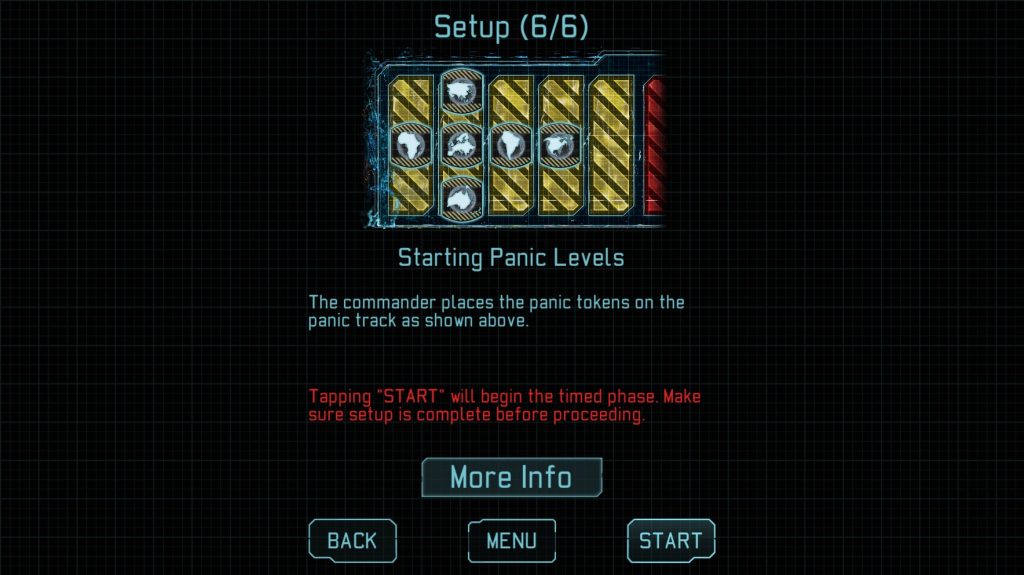
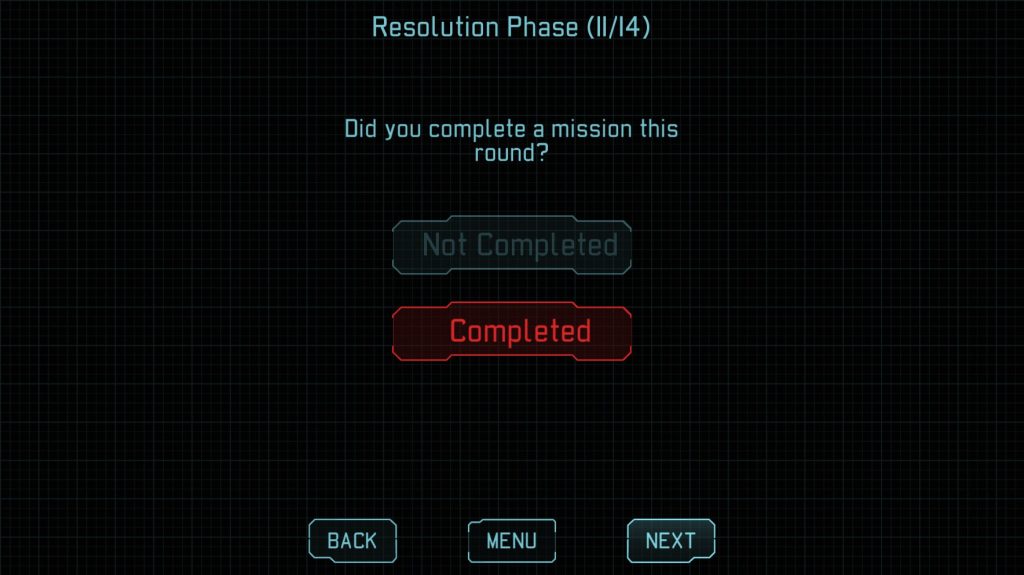
Both phases are controlled by a free app that is available on almost any platform – including a web based version for those who don’t want the footprint of an install. The app adds a really unique element, dictating game progression whilst providing atmospheric music and audible event indicators. Fantasy Flight Games have utilised the technology really well to facilitate many specialised options. Out of the box they’ve got varying difficulties, contextual instructions, a tutorial and randomisation of game events. But they’ve also provided a base from which they can provide additional downloadable content or updates. The app looks great as a gimmick but works fantastically as a key game element adding to a unique and fun experience.
The four roles available to players are Commander, Chief Scientist, Central Officer and Squad Leader. Each role has specific responsibilities and a distinct set of assets with which to deal with them. The easiest role is probably the chief scientist as there’s almost no impact if you fail at your task, and not many decisions to make. The Central Officer is fun as there’s low impact for failure but you get to control the app and inform players of the current tasks. The Commander is responsible for aerial defence and the budget – two important factors in determining panic levels. The most difficult role, however, would be the Squad Leader. The Squad Leader is responsible for troop management, base defence and mission completion. Troop combat has an added level of complexity not present in other roles and, considering base destruction is a quick way to lose the game, has added pressure not to make mistakes. While not entirely balanced the mix of roles allows for better teamwork as some roles can concentrate on specific tasks while others manage the “big picture” stuff.
While the prospect of a timed phase seemed daunting at first (especially considering the short spans allowed) it’s a feature that worked to the games advantage making it truly unique. It does this by encompassing something you can’t necessarily script or plan for – the “human element”. By this I mean that it forces people into a potentially stressful situation by making them respond quickly and thoroughly to various situations. If a player becomes flustered they may exceed their time limit or over allocate resources, adversely affecting not only the other players but, potentially, the outcome of the game.
Attaining team coherence whilst making time critical decisions and monitoring global panic might sound more stressful than fun but, with the right people, it can be fantastic. As with real life the success of any team depends heavily on both your personal knowledge and ability to work well with others. Once you conquer that, the time limit doesn’t feel so intrusive. A key part of achieving this is to ignore precedents set by other board games. XCOM won’t give you time to plan and consider each move so your primary goal should be ensuring you perform your tasks concisely and with good effect. Don’t worry about what the science officer is researching or where the commander is placing interceptors; you’re the squad leader and should be managing troop deployment whilst ensuring you don’t blow the budget. Using the time between your actions to plan your next move is a crucial component of success.
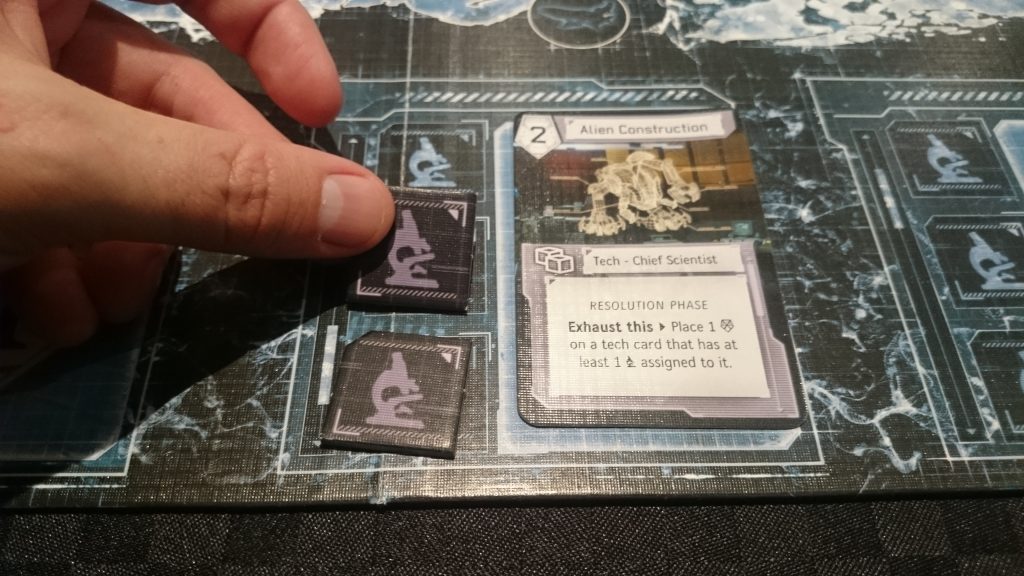
That said there is still a very strong team element to the game so you want to ensure you’re all supportive and working towards a common goal. You have a limited shared budget and, if your base is destroyed or panic levels rise too high, it’s game over. No point being a resource heavy science officer whose tech can’t be used because you’ve blown the budget. During the initial rounds your actions are fairly restricted in your role however, as the game progresses and new research becomes available, you’ll earn asset cards which allow you to assist your team members with their tasks too.
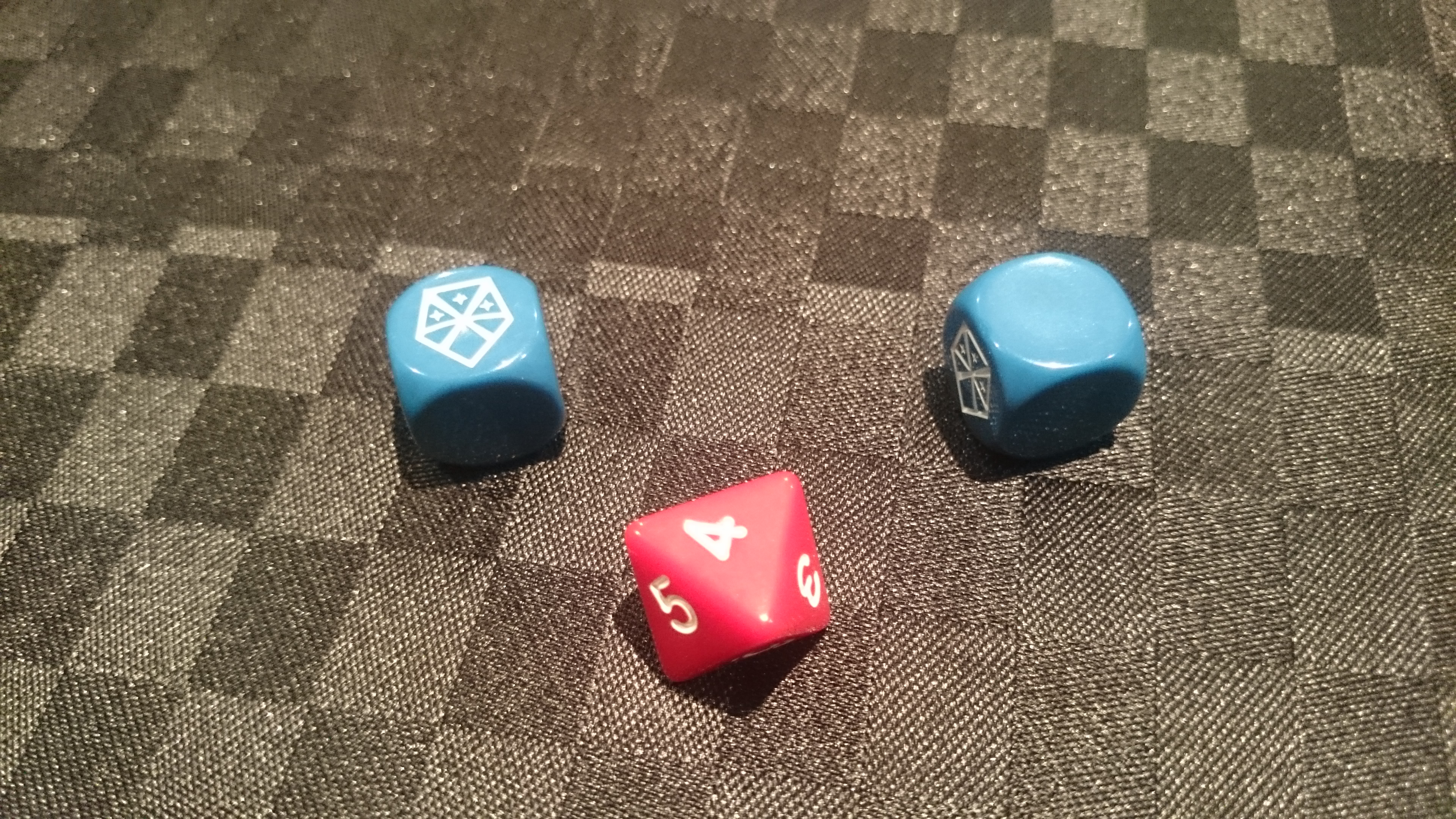
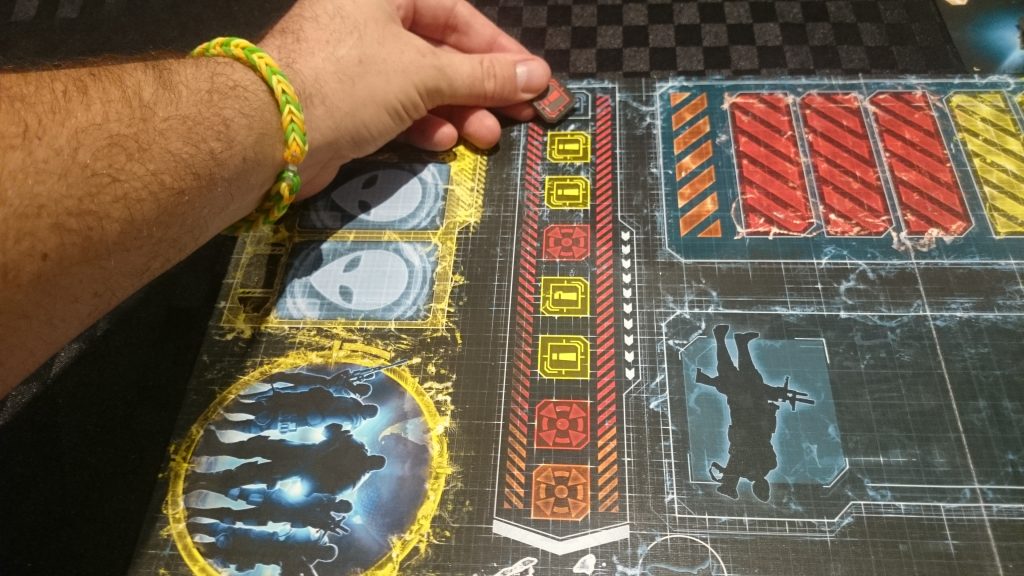
After the timed phase is complete you enter the resolution phase. Whilst still controlled by the app this phase has no time limit allowing you as much as you need to resolve the effects of decisions made during the timed phase. Most tasks are resolved using a clever “push your luck” dice mechanic in which you simultaneously roll one XCOM die per unit assigned alongside a red alien die. An Xcom die is a d6 with a 1 in 3 chance of success and the alien die is a regular d8. The alien die relates to a threat track located on the board. When resolving a task, if the alien die is equal to or less than the number on the threat track the resolution is deemed a failure and the assets lost/exhausted. If you don’t roll enough successes to complete a task you have the option to “push” allowing you to re-roll all die for additional successes. The risk involved in this is that, each time you push, you must increase the threat track by one thus increasing your chance of asset loss. I really enjoyed this aspect of the game and felt it added something new to a basic fail/success die roll.
While the mechanic was good I felt the tasks weren’t balanced well enough to make the decision to gamble tough. When researching or performing orbital defence a loss resulted in exhausted asset (unusable until next round) whereas base or global defence failure resulted in the loss of asset meaning you had to wait an entire round until you were able to purchase a new one. Worse still, if you left a global or base defence unresolved, you suffered the same negative effect as if you’d failed. You don’t lose the asset but would suffer base damage or a rise in panic. So, in most cases, why wouldn’t you gamble? Another issue with the mechanic was that, for each battle, the threat track returned to 1. So, if you had two soldiers with which to attack a muton why would you put them together and roll two dice when you could attack separately and reset the threat track between battles?
Another issue I had with imbalance related to the way you won or lost a game. To win the game you merely have to complete a final mission. This mission becomes available at a time discerned by the app and, I believe, relates to the number of regular missions you complete. Missions carry no threat and are resolved 100% by dice rolls meaning you can often complete an entire mission with just a few lucky rolls. This can create an abrupt end to the game which feels disjointed from the rest of the experience. You work as a team for an hour responding to threats and managing resources then, when the final mission appears, your Squad Leader can end the game within minutes.
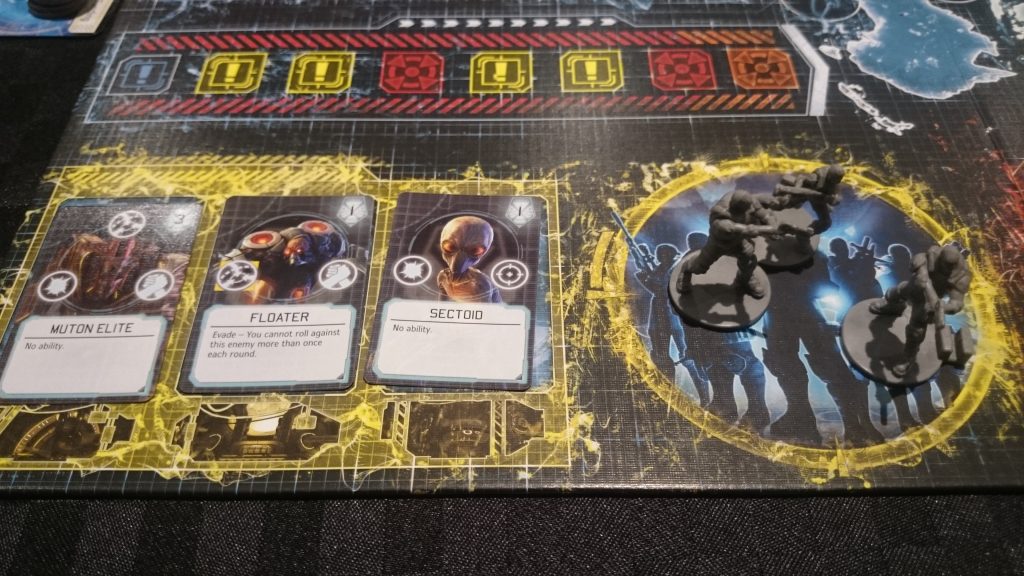
Similarly the game can be lost quite quickly via either your base being destroyed or two continents becoming panicked. Whilst panic offers some level of management base damage is severe and irreversible. During a round you can have up to three enemies in your base at any time. For each enemy left alive at the end of the resolution phase you base takes one damage. Take 7 hits and it’s game over. While this does force you to prioritise base defence above other things I felt the speed at which you took damage sometimes felt unfair.
There’s a wealth of additional detail in XCOM: The Board Game but I’ll probably cover that in our “how to play” videos. If you’re still not sure if this game is for you that would be a great place to go next.
Despite the tenuous balance XCOM: The Board Game is still one of the best co-operative board games I’ve played. The diversity of roles and depth of options allow for many different play styles while the timed phase adds a reactive team element not found in many strategy games. The box states that it can be played up 1 to 4 players but I found it’s best with 3 or 4. You can play with 1 but it’s a pretty lousy experience and ignores one of the best things XCOM: The Board Game has going for it – the thrill and stress of time based teamwork. If you have a group of people who are keen to enjoy a time based resource management experience then XCOM: The Board Game is a great title to add to your collection.