

Iron Lung is a bit of a rarity in modern horror cinema: a film that embraces minimalism not as a budgetary constraint, but as a creative weapon. It doesn’t rely on spectacle or elaborate set pieces, but instead builds its tension from the smallest possible space. Adapted from David Szymanski’s cult indie game, the movie transforms a tiny metal coffin of a submarine into a fantastically unsettling horror platform.
Set in a dying universe where humanity clings to survival, the story follows a convict forced into a rusted, barely functional submersible and dropped into an ocean of blood on an alien moon. The premise is simple, but the execution is anything but. The film thrives on tension, silence, and the oppressive weight of isolation. Every groan of metal, every flicker of failing machinery, every distant thud becomes a character in its own right.

Markiplier delivers an exceptional performance that leans heavily on physicality and psychological unravelling. With no room to hide—literally or narratively—he carries the film with a raw, frantic energy that feels uncomfortably real. The camera rarely leaves the confines of the sub, and that creative choice pays off. The audience is trapped right alongside him, breathing the same stale air, feeling the same creeping dread.
What makes the film even more impressive is the sheer creative lift Markiplier takes on behind the camera. Writing and directing a feature debut is ambitious enough, but doing so while adapting a game that is, in many ways, closer to a tech demo than a traditional narrative is another challenge entirely. After seeing the film, I downloaded and played the game myself. While I can appreciate its eerie atmosphere and minimalist tension, it’s still hard to fully grasp how it developed such a devoted cult following. That only underscores the achievement here: Markiplier not only expands the game’s sparse framework into a fully realised story, but also captures its oppressive mood with remarkable fidelity. It’s one of those rare adaptations that remains true to its source material while also surpassing it.
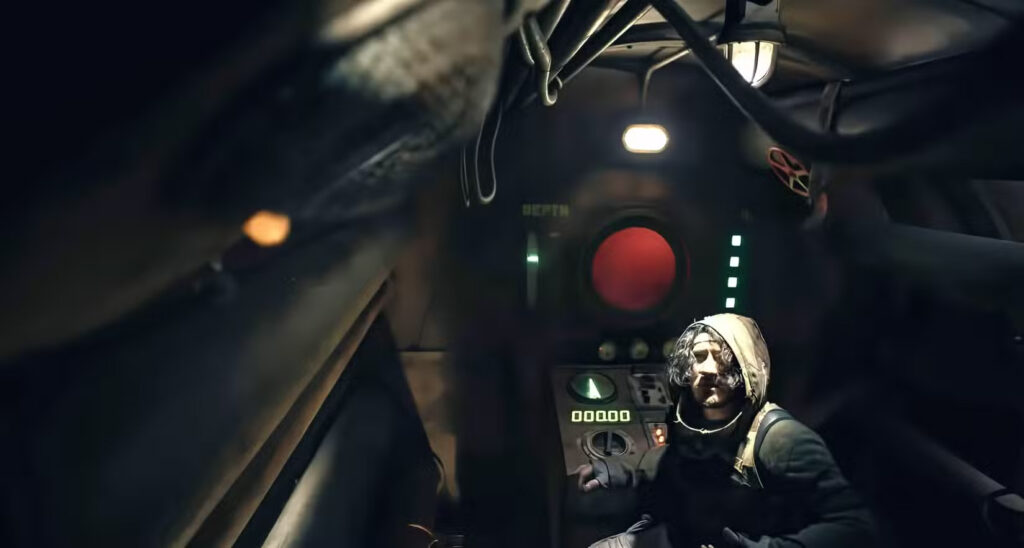
Visually, Iron Lung is grim and tactile. The production design commits fully to the retro‑industrial aesthetic of the game, with every bolt, pipe, and flickering light contributing to the oppressive atmosphere. The cinematography makes the most of the limited space, finding new angles and shadows that keep the environment unsettling without feeling repetitive. The sound design is equally crucial—every metallic groan and distant thud adds to the sense that the sub is one bad moment away from catastrophe.
Where some horror films rely on jump scares or spectacle, Iron Lung commits to atmosphere. It’s a slow suffocation, a psychological pressure cooker that rewards patience. The final act escalates into a fever dream of cosmic terror, delivering an ending that is bold, unsettling, and faithful to the spirit of the source material.
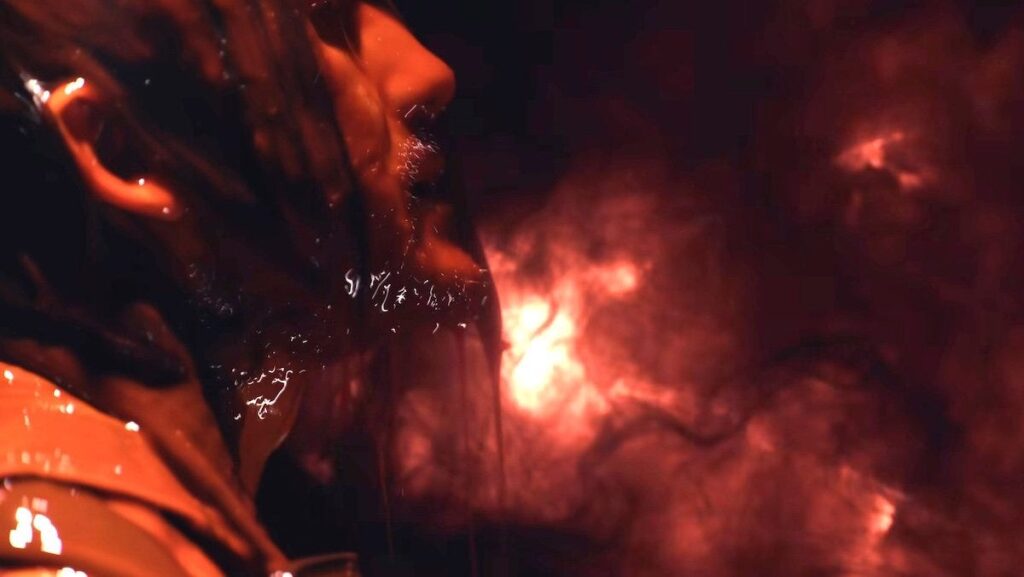
Iron Lung isn’t a blockbuster crowd‑pleaser and won’t appeal to everyone. It’s intentionally claustrophobic, relentlessly tense, and uninterested in offering comfort. However, for fans of cosmic horror, minimalist filmmaking, or stories that explore the fragility of the human mind under extreme conditions, it’s a compelling and memorable experience.
It’s a film that lingers—not because of what it shows, but because of what it refuses to show, leaving the audience to fill the darkness with their own imagination