

Abzu is a game that, on paper, speaks directly to me. It’s made by some of the minds behind the stunning Journey, It’s set in the ocean, with all its bountiful aquatic life, and the great Austin Wintory provides the score for you to swim through the waters to your hearts content. But, with all these ticks, it’s surprisingly lacking in the one thing that made Journey so unique for me – heart.
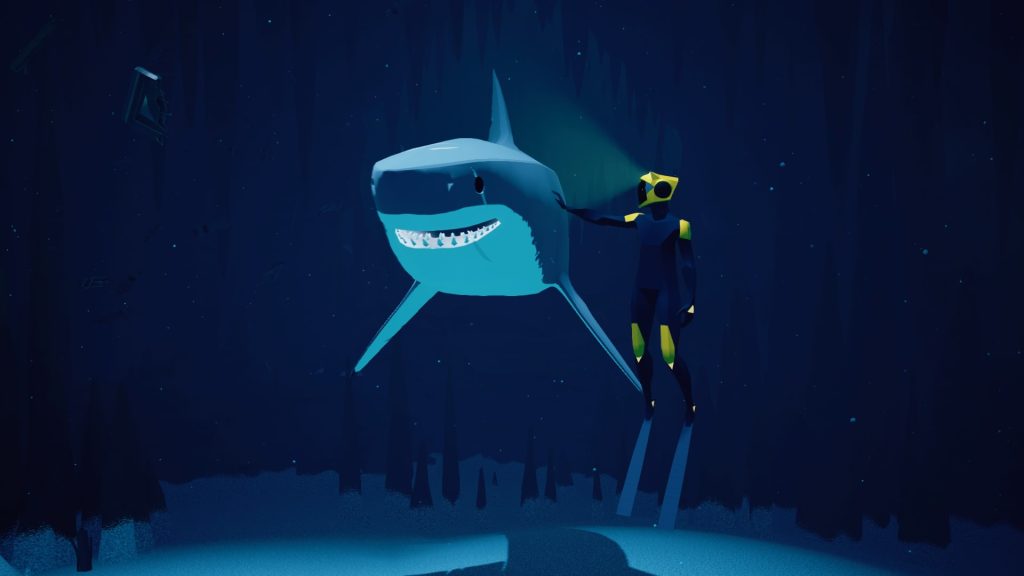
Within Abzu, you control a scuba diving humanoid. Navigating through the depths of random oceans, you encounter some little robotic pals who assist by breaking down barriers between worlds. Before too long, you’re interrupted by a Great White Shark who does away with your robot buddies. Eventually, the humanoid and the shark will cross paths again so, until then it’s up to you to peacefully swim through the environment, appreciating the beauty that surrounds you. Granted, what I’ve written isn’t exactly a ‘plot’ as such – it’s simply my interpretation of the events within Abzu. A bit like how different people can walk away from Journey with different feelings as to what has gone on.
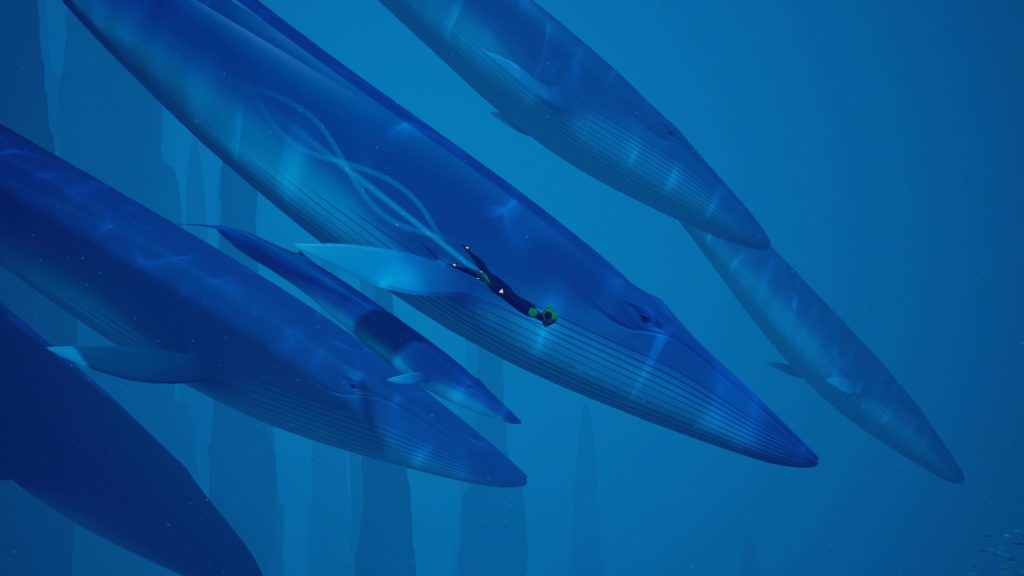
Where Journey paired you up with strangers from all around the world, Abzu sets you off on a solo voyage. There’s no meaningful relationship with another being. Rather the relationship you’re invited to create is that between you and the marine world. At countless opportunities, you may sit down, mediate, and simply watch these digital fish coexist with one another. Sometimes the larger fish will eat the smaller fish providing evidence of the world existing outside of your presence. If mediating isn’t your style, no problem, just hitch a ride on a large enough creature and they’ll taxi you around the world, giving you a glimpse of how they see things. If the aim of Abzu is to give greater respect and understanding for the real world oceans, then it certainly managed to achieve that.
Abzu navigates away from the Endless Ocean-clone it could be, and instead implements an attempt at mythology creation and world building, with the presence of ruined cities and murals appearing to provide a visual history depicting what has gone on in the world. This subtle mythology worked masterfully in Journey, informing the motivations and spirituality of the scarf wearing folk; ultimately assisting the intended emotional kick that the experience has provided many willing participants. The attempt at mythology within Abzu works opposite to that, distancing the participant from the world they inhabit. At once, you’re in awe of the sights of schools of fish swimming around together, marveling at a digital ecosystem brought to life; then you’re dragged through hallways of crumbling manmade buildings, deflating the feeling of amazement.
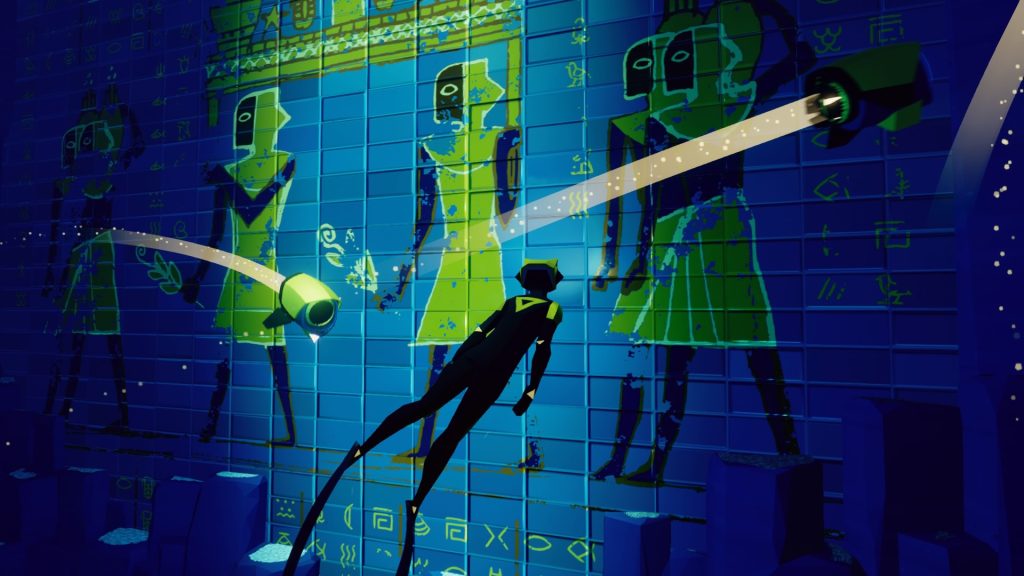
Maybe that is the point of Abzu – to show how, no matter where on this planet of ours, mankind will find a way to squeeze itself into an existing ecosystem and conquer it. Where the vague nature of Journey allowed participants to come to their own realisations of what they experienced, Abzu is simply a little too vague. Swimming with the fishes is a lovely – if quaint – experience, so when you’re forced into moments where you have to navigate through these structures, you can’t help but feel robbed. Thrown into the mix is the presence of some terribly obnoxious floating mines which make some of the later worlds a chore to progress through. Granted, this is a short, three or so hour experience, so you’re not presented with these moments all too often.
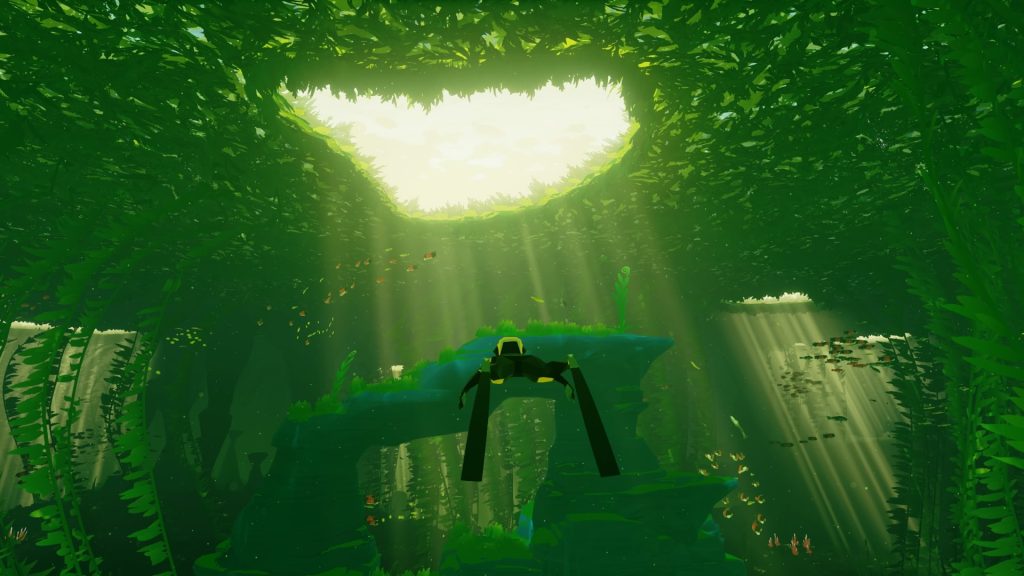
Thankfully, outside these intrusive moments, the feeling of awe and wonder makes up the bulk of your time under the sea. Whether it’s swimming with sea turtles, or catching a ride on a giant squid, your ‘screen capture’ button will be given a solid workout. There were countless times where I would hitch a ride on a creature and drive them to breach the surface, launching them into the air like Willy set free, then watching us crash down in unison in a mighty splash. These are the water cooler moments in Abzu – they’re completely natural, driven by the user wanting to create joy within a beautiful world. And it really is a beautiful looking world. With all of its different shades of blue, from pastels to darkness, Abzu is nothing but a joy to look at.
However, it’s also its biggest curse. There’s simply no matching the real world imagery of what exists under the waves. The somewhat cartoonish appearance makes for a nice artist’s impression of a mystical marine world, but at times it almost reaches uncanny valley levels. Within all this beauty, there’s something just a little off here – and if I were forced to put a finger on it, I’d say it’s the scuba diving fellow you control.
Simply put – there is nothing graceful about a square headed humanoid figure frog kicking underwater, spinning every so often. Where the scarf wearing journey people in Journey appeared elegant, and purposeful as they skated across the sand dunes, here the avatar moves like a third grader who’s managed to come third in the school swimming class. It’s a bizarre version of swimming, one that still has years of practice ahead before they’re looking anything like Michael Phelps in the water. The strange Katamari-esque head isn’t helping matters either – coming across like a person who has stuck a tissue box on their head and called it a day. When your entry point into the world is an odd looking figure, you’re already pushed back from embracing it.
Bizarre scuba divers aside – the core mechanic within Abzu works wonderfully. Swimming is a hard action to get across within a digital environment – get it wrong and you’ve created a strange looking flying simulator. Here, you genuinely feel like you are underwater, experiencing a world in motion. The ‘wow’ moments do truly excite, even if they often lack their intended emotional kick. What does disappoint is the lack of grand moments where the actions on screen unite with Austin Wintory’s score. Think the use of Nasense within Journey as you skate down the sand dunes into the sunlight. Wintory’s score is stunning to hear, however, it works better as its own entity rather than in unison with the world of Abzu. What I would have given to have the score crescendo at the right moment as you swim in the depths with a pod of humpback whales.
It’s hard to qualify ‘experiences’ like Journey and Abzu as being ‘games’ – they are more akin to being artistically manufactured emotion manipulators. ‘Gamey’ elements do appear, with the existence of random collectibles that feel shoe horned in to extend play time, amounting to little more than lost schools of fish, meditation points and random seashells. Outside of the meditation points, these add little to the experience – feeling more like something for trophy hunters to seek out rather than adding to the world.
Going in to Abzu, I wanted to experience the same roller-coaster of emotions that I experienced with Journey. Sadly, I was rarely close to feeling what I felt in that world. What I walked away Abzu feeling was no doubt the same feeling that many people felt when finishing Journey – is that it? Manufactured beauty can still be beautiful, but it means little when there is little heart or soul within it. Maybe some may feel in Abzu what I felt in Journey – for me, I felt that I was left floating in an empty sea.