

In a world saturated with caped crusaders and cinematic universes, few stories have managed to inject fresh energy into the superhero genre quite like My Hero Academia. The hit anime, based on Kōhei Horikoshi’s manga, has become a cultural touchstone since its debut in 2016 — blending the heartfelt spirit of classic coming-of-age tales with the explosive spectacle of a comic-book blockbuster.
At first glance, My Hero Academia might seem like familiar territory: a school for gifted teens training to save the world. But beneath its colorful surface lies a surprisingly layered narrative about legacy, morality, and the true cost of heroism.
The story centers on Izuku Midoriya, an ordinary boy in an extraordinary world. Born without a “Quirk” — the superpowers most of humanity possesses — Midoriya still dreams of becoming a hero. His chance comes when he meets All Might, the world’s number-one hero, who sees something special in him and passes down his own power, One For All.
What follows isn’t just a tale of power-ups and flashy battles (though there are plenty of those). It’s a sincere exploration of what it means to be a hero — the courage to act even when the odds are impossible, and the empathy to save others even at personal cost.
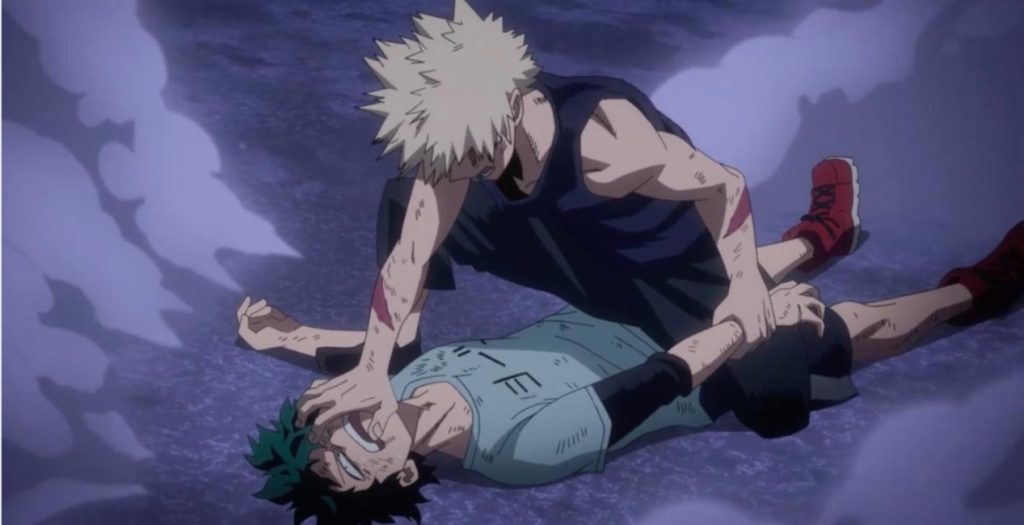
Part of My Hero Academia’s magic lies in its ensemble cast. Katsuki Bakugo, Midoriya’s childhood rival, evolves from a brash bully into a deeply conflicted prodigy. Shoto Todoroki, burdened by family trauma, embodies the struggle between inherited duty and personal choice. Even the villains, from the disillusioned Stain to the tragic Tomura Shigaraki, blur the line between good and evil, forcing heroes — and viewers — to question the society that creates them.
Studio Bones brings Horikoshi’s world to life with jaw-dropping animation. The fights are kinetic and cinematic, blending hand-drawn artistry with pulse-pounding intensity. Moments like All Might vs. All For One or Deku vs. Todoroki feel monumental, yet the quieter scenes — a shared smile, a trembling hand — hit just as hard.
Composer Yuki Hayashi’s score deserves special mention. Tracks like “You Say Run” have become anthems of triumph, perfectly capturing the series’ emotional highs and heroic heart.
No series is without its missteps. My Hero Academia occasionally stumbles with pacing — some arcs drag, and a few promising side characters get lost in the shuffle. Yet even at its slowest, the show never loses sight of its emotional core.
In an era where superhero fatigue is all too real, My Hero Academia feels like a breath of fresh air — a story that celebrates idealism without ignoring the cracks beneath it. It’s earnest, thrilling, and profoundly human.